-
DOSBox 8 Disc Floppy + S3 + SB16 version last published 5 years, 2 months agoThe installer requires the 8 disc version of WfW 3.11. S3 and SB16 are downloaded from the same source as the other installer, the relevant instructions apply. For display I would go with 800x600, games using win3.1 won't need a higher resolution than this.
-
DOSBox CD version last published 3 years agoAutomatic install of "Windows 3.1" CD edition using DOSBox- This script installer should be compatible with all "Windows 3.1" CD install
- Nota:
-- If Windows 3.1 asks for one of his floppy, type c:\win31cd
-- You will not need to install video (S3) and audio (SB16) drivers, they will be already installed during script installer process
-- S3 Graphic drivers located at c:\drivers\s3
-- SB16 Audio drivers located at c:\drivers\sb16 -
DOSBox Floppy Disks version last published 6 years, 11 months agoA vanilla installation.Currently require to manually extract the contents of the install floppy disks into a single folder.
-
DOSBox Floppy Disks + Extras version last published 6 years, 11 months agoA installation with S3 and Sound Blaster drivers.Currently require to manually extract the contents of the install floppy disks into a single folder.
During Windows Setup select a custom install by pressing C
Select Display
Scroll down to Other
Type: B:\S3
Select S3 Trio64V 1.70.04 1024x768 64K C SF (Clicking Desktop Settings crashes with this option)
or
Select S3 Trio64V 1.70.04 1024x768 256 C SF (Clicking Desktop Settings hangs but does open with this option)
Once Windows has installed DO NOT CLICK REBOOT.
When the Audio drives are installing at the part it asks to "proceed using the settings shown"
Scroll down to Windows 3.1 path, press enter and accept the default option. -
Linux US version last published 4 months, 1 week agoWindows 3.1 on Linux!- Using Dosbox Pure Unleashed
- Ready to use: drivers already installed
- Press "CTRL+F12" to show Dosbox Pure Unleashed menu
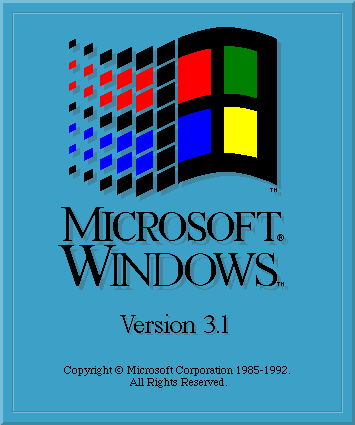
Windows 3.1 is a major release of Microsoft Windows, a family of graphical user shells and operating systems. It was released to manufacturing on April 6, 1992, as a successor to Windows 3.0. Like its predecessors, the Windows 3.1 series run as a shell on top of MS-DOS; it was the last Windows 16-bit operating environment as all future versions of Windows had moved to 32-bit.
Windows 3.1 introduced the TrueType font system as a competitor to Adobe Type Manager. Its multimedia was also expanded, and screensavers were introduced, alongside new software such as Windows Media Player and Sound Recorder. File Manager and Control Panel received tweaks, while Windows 3.1 also saw the introduction of the Windows Registry and add-ons, and it could utilize more memory than its predecessors.
Microsoft also released special versions of Windows 3.1 throughout 1992 and 1993; in Europe and Japan, Windows 3.1 was introduced with more language support, while Tandy Video Information System received a special version, called Modular Windows. In November 1993, Windows 3.11 was released as a minor update, while Windows 3.2 was released as a Simplified Chinese version of Windows 3.1. Microsoft also introduced Windows for Workgroups, the first version of Windows to allow integrated networking. Mostly oriented towards businesses, it received network improvements and it allowed users to share files, use print servers, and chat online, while it also introduced peer-to-peer networking.
The series is considered to be an improvement on its predecessors. It was praised for its reinvigoration of the user interface and technical design. Windows 3.1 sold over three million copies during the first three months of its release, although its counterpart Windows for Workgroups was noted as a "business disappointment" due to its small amount of sold copies. It was succeeded by Windows 95, and Microsoft ended the support for Windows 3.1 series on December 31, 2001, except for the embedded version, which was retired in 2008.
- Genre: Operating System
- Platform: MS-DOS
- Website: www.microsoft.com


